The Heist: A Marketing Agency Stole an Entire Book
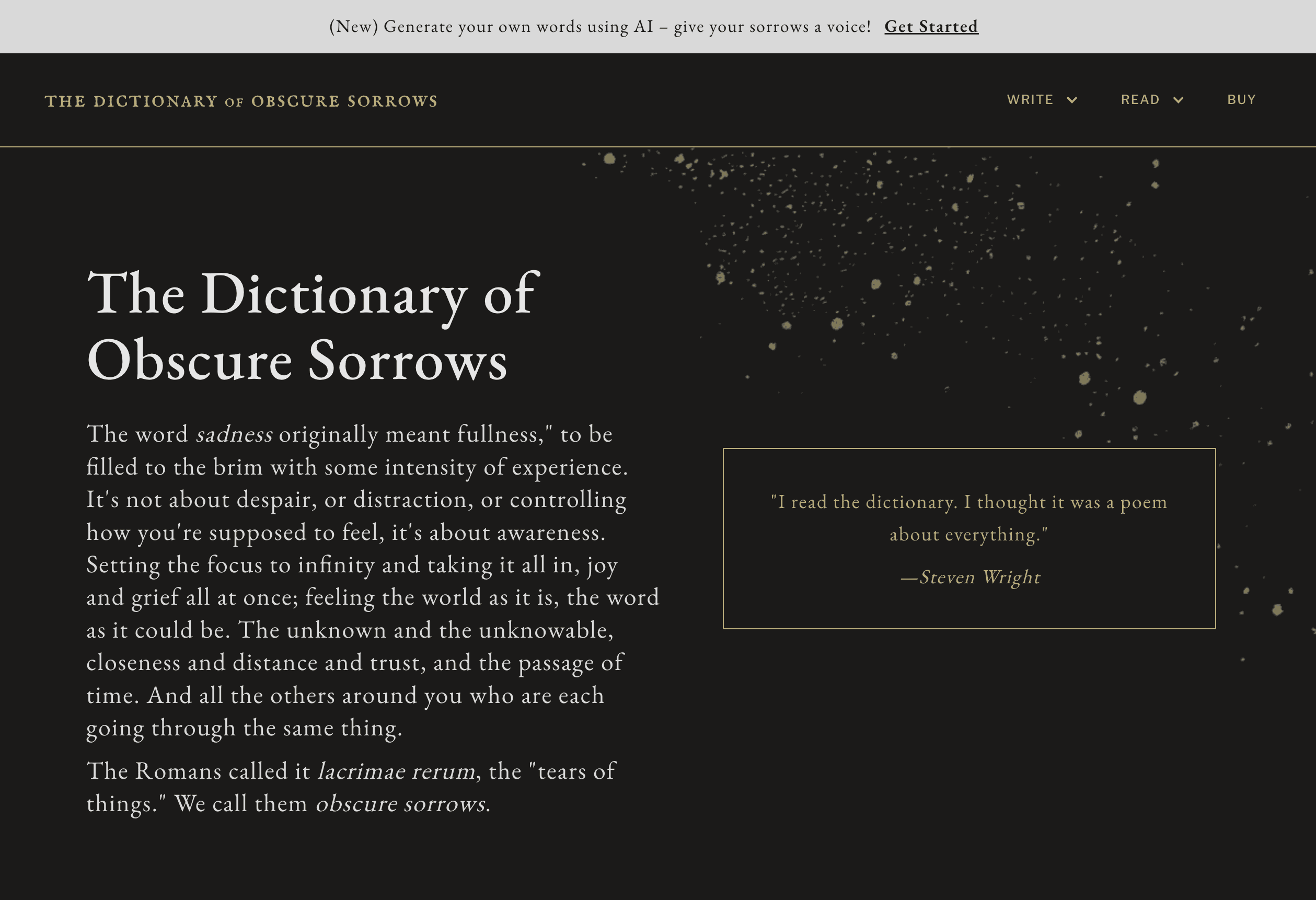
Last week, MetaFilter users spotted a polished website for The Dictionary of Obscure Sorrows. It had everything: author bio, press mentions, Amazon links. It also had the full text of John Koenig’s 311 neologisms—foreword, definitions, etymologies, essays. But the original photo-collage illustrations were gone, replaced by DALL-E 2 images riddled with artifacts. A banner urged visitors to "Generate your own words using AI."
John Koenig had nothing to do with it. He told the author: "Yeah man, I had nothing to do with it. Don’t know what to think or do about that, as the site is pretty slick. Nicer than my own, really."
The culprit: Qontour (formerly Prompt Digital), a San Francisco web design agency. They listed themselves in the site credits and featured the project in their portfolio, bragging: "Qontour built the interactive digital platform – designing the site in Webflow, generating an AI-powered image library, and launching a feature that lets visitors submit their own sorrows and add new definitions to the dictionary."
How They Did It: AI-Generated Everything
Qontour replaced Koenig’s handcrafted collages with DALL-E 2 images. The "Submit A Sorrow" feature uses OpenAI’s GPT-4 to generate new words, etymologies, and definitions from a user’s description of a feeling. The site’s entire text was written by Claude, as Qontour explains on their "Why We Use Claude" page: "Every page on this site was written in Claude" using an "author persona" they call "Q."
They also inserted their own Amazon affiliate code (under their previous name Prompt Digital) to earn commissions on every book sale. The site now ranks #1 on Google for queries including "Dictionary of Obscure Sorrows," individual word names, and even "John Koenig." ChatGPT and Gemini both cite the bootleg as the official site.
Copyright Failures and DMCA Ineffectiveness
Qontour’s footer says "Dictionary Content © John Koenig – All rights reserved. User-Generated Content open licensed – CC Zero." That doesn’t grant them the right to publish the book. They also claim a Creative Commons license on the whole site, which is meaningless for content they don’t own.
Simon & Schuster filed two DMCA takedowns with Google in July 2023, requesting removal of two pages from search results. It had no effect—the site remains indexed and top-ranked.
The Bigger Trend: AI-Enhanced Plagiarism
This isn’t isolated. The author notes a "broad trend across the web, where people are using AI to repackage, optimize, and replace the authoritative sources it was trained on for profit." Every day, AI-generated sites siphon attention from human creators: bloggers, authors, journalists, artists. The author even questions whether the emails he receives are from humans.
Technical Details
- AI Models Used: DALL-E 2 for images, GPT-4 for word generation, Claude for site copy.
- Platform: Built in Webflow.
- Affiliate Code: Amazon associate ID registered under Prompt Digital.
- DMCA Response: Two takedowns filed July 2023; no effect on search ranking.
- Ranking: Outranks official site, publisher site, and Wikipedia for all relevant queries.
What Developers Should Know
This case illustrates how easy it is to scrape, repackage, and monetize copyrighted content with AI tools. The technical barrier is low: a Webflow site, an OpenAI API key, and a scraper. The legal barrier is higher but enforcement is slow. DMCA takedowns didn't work; the site stayed up. Search engines still surface the bootleg as authoritative.
The Last Word
Koenig’s project is about naming human emotions. The irony: there’s no word for the feeling of seeing your life’s work ingested and replaced by a machine. Maybe there should be.
Buy the real book from Powell’s Books, the publisher, or your local indie bookstore. If you must use Amazon, use the author’s own affiliate code so he gets the largest cut.