IsoDDE: Beyond AlphaFold 3 for Drug Design
Isomorphic Labs today unveiled the Isomorphic Labs Drug Design Engine (IsoDDE), a unified computational system that pushes past AlphaFold 3 in predictive accuracy and introduces capabilities critical for real-world drug discovery. The key numbers: on the challenging 'Runs N' Poses' benchmark, IsoDDE more than doubles AlphaFold 3's accuracy for the hardest systems (those most dissimilar to the training set).
Doubling Accuracy on Novel Protein-Ligand Structures
AlphaFold 3, released in 2024 alongside Google DeepMind, transformed protein-ligand structure prediction. But benchmarks revealed a gap: it struggled to generalize to structures dissimilar from its training data. IsoDDE addresses this directly. On the 'Runs N' Poses' benchmark (Škrinjar et al. 2025), which tests generalization to novel pockets and ligands, IsoDDE achieves more than double the accuracy of AlphaFold 3 on the most difficult category (similarity bin 0-20). The engine successfully models complex out-of-distribution events like induced fits and cryptic pocket opening.
Antibody-Antigen: 2.3x Better than AF3, 19.8x Better than Boltz-2
IsoDDE also excels at modeling antibody-antigen interfaces. On a challenging, low-homology test set (n=334), it outperforms AlphaFold 3 by 2.3x and Boltz-2 by 19.8x in the high-fidelity regime (DockQ > 0.8). Notably, it shows remarkable performance on the CDR-H3 loop — the most variable and difficult part of an antibody to predict — unlocking de novo antibody design.
Binding Affinity Prediction: Surpassing Physics-Based Methods
Knowing structure is only half the battle; drug optimization requires accurate binding affinity predictions. Traditional physics-based methods like FEP are accurate but computationally expensive. Deep learning methods are faster but less accurate. IsoDDE surpasses all deep-learning methods on three public benchmarks: FEP+ 4, OpenFE, and the recent CASP16 blind binding affinity prediction task. Remarkably, it exceeds the performance of physics-based methods like FEP, even though those require experimental crystal structures while IsoDDE does not.
Blind Pocket Identification from Sequence Alone
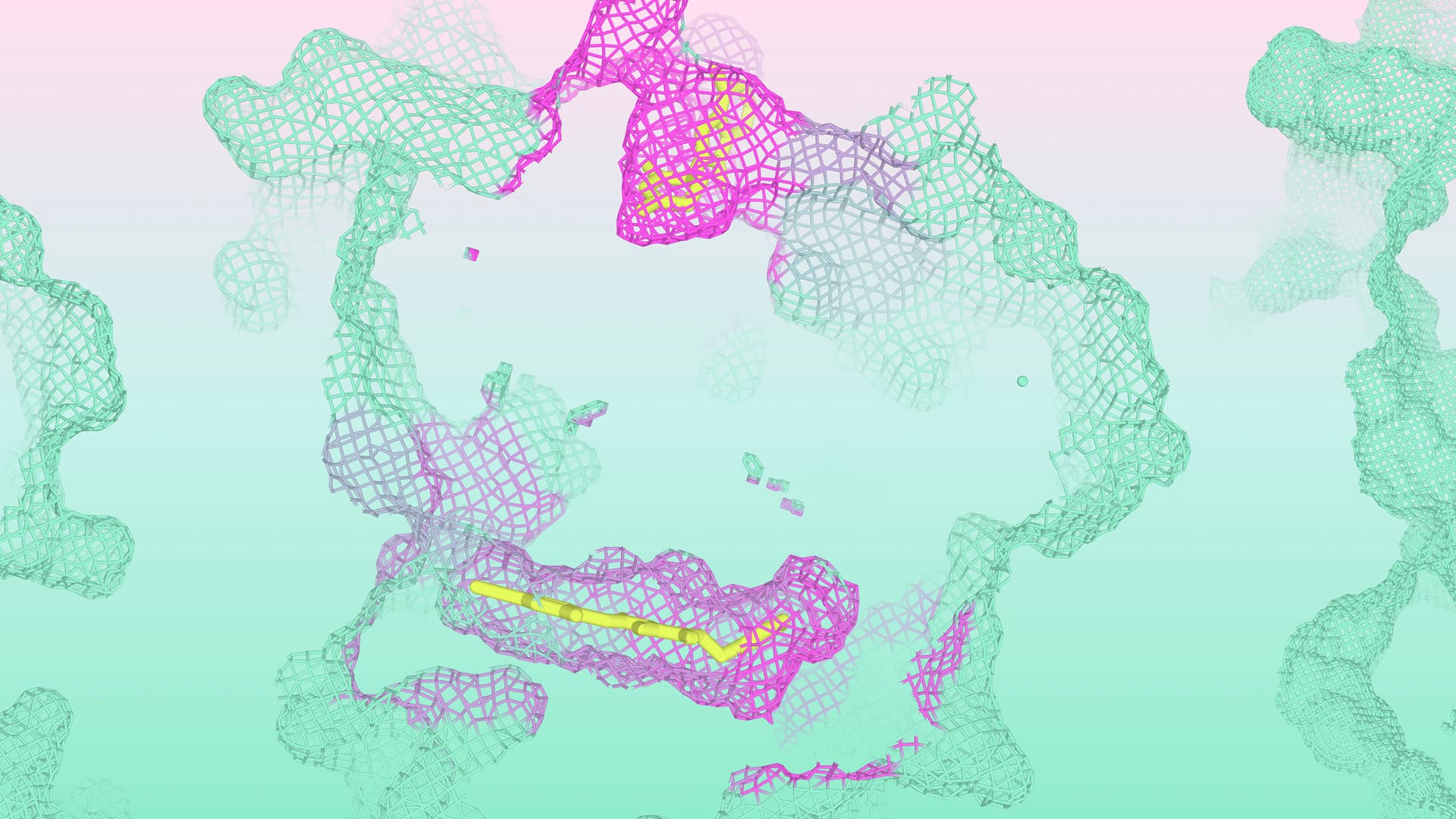
IsoDDE can identify novel, ligandable pockets on proteins using only the amino acid sequence as input — without knowing the ligand. This 'blind' pocket identification approaches the accuracy of experimental techniques like fragment-soaking, but runs in seconds on a computer. The engine recapitulated the recent discovery (Dippon et al. 2026) of a novel cryptic allosteric site on cereblon, a key protein in targeted protein degradation, predicting both the known thalidomide-binding pocket and the new cryptic site using only the sequence.
Technical Architecture and Availability
IsoDDE is a unified system combining multiple predictive models that work in concert. While the technical report is available on Zenodo (doi:10.5281/zenodo.19699685), Isomorphic Labs has not released the model weights or code publicly. The system is currently used internally by Isomorphic's drug design teams.
Why It Matters for Developers
For developers working in computational biology or AI drug discovery, IsoDDE demonstrates that unified, multi-task models can outperform specialized physics-based methods. The ability to predict binding affinities without experimental structures could reduce the need for expensive FEP calculations. The blind pocket identification capability opens new approaches for target identification.
Next Steps
Read the technical report on Zenodo. If you're building drug discovery pipelines, consider how IsoDDE's capabilities could replace or augment existing structure prediction and affinity prediction tools. Watch for potential API access or model releases.